
Z Route: Redemption
37GAMES GLOBALStrategy
4.1418.00 Reviews
- Version
- 1.43.02
- Installs
- 10.00M
- Age Rating
- Teen
Screenshots
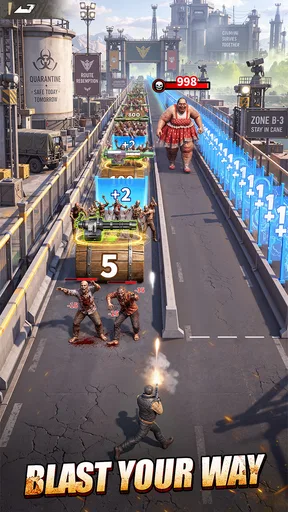
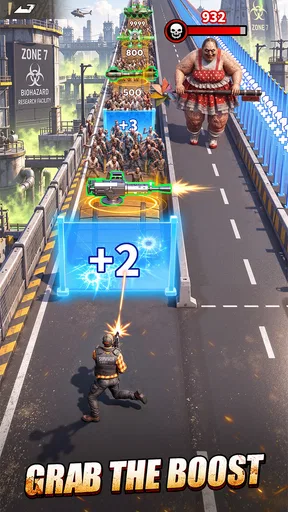
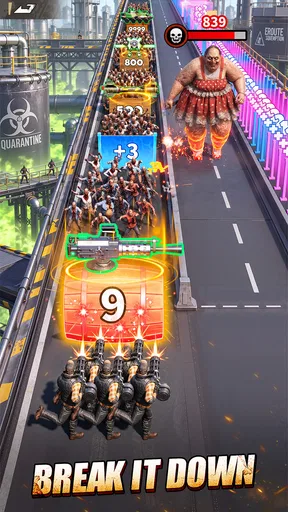
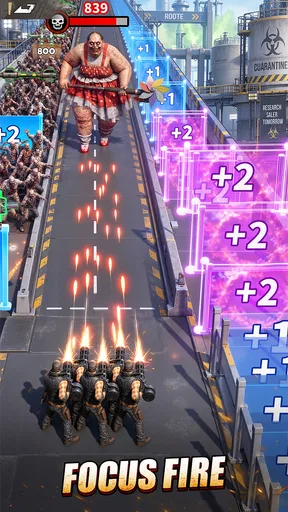

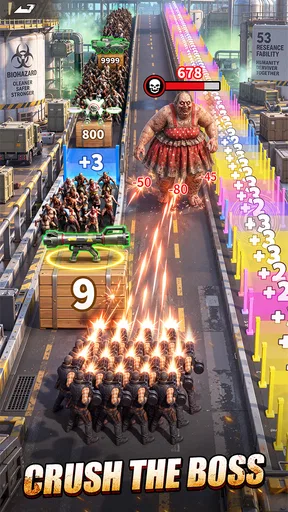
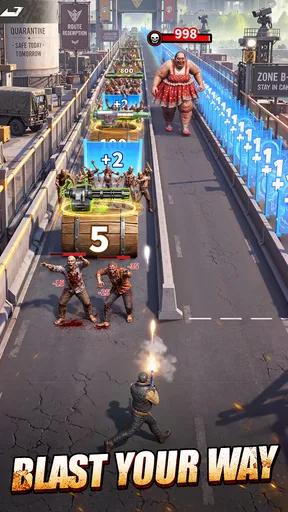
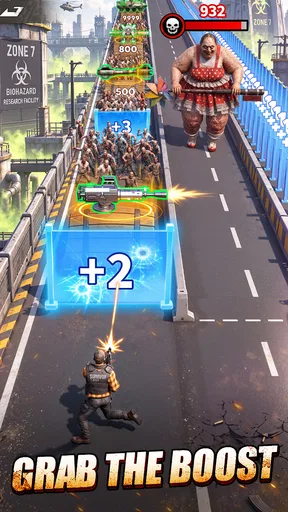
Our Review of Z Route: Redemption
 Analysis by Appyee
Z Route: Redemption caught my attention because it turns a simple choice into the main source of tension: which door should I take, and what might be waiting after it? Developed by 37GAMES GLOBAL, this free strategy game is built around quick decisions and survival-minded thinking rather than the slower planning style of a traditional empire builder. I found that difference important when deciding whether it deserves space on your phone.
The basic appeal is easy to understand. You are presented with routes and choices, and each decision can change how safely you move forward. The game’s short store summary, “Choose the right door. Survive the end,” captures the mood without explaining away the experience. I went in expecting a straightforward choice game, but the real test is learning how to make decisions when I do not have perfect information.
That makes this a useful option for players who enjoy strategy in small bursts. It is also a game that benefits from patience. If you want a deep tactical system with a large map, detailed unit management, or long sessions built around careful construction, this is probably not the right direction. If you like testing judgment, reacting to uncertainty, and trying again after a poor decision, it has a more convincing case.
How I Decided Whether Z Route: Redemption Was Worth Playing
I judge a compact strategy game by more than whether its first few choices feel tense: I want to know if I can develop a better habit of weighing risk, and whether returning still feels worthwhile once the novelty wears off. For this one, I’d pay attention to how often I’m genuinely reconsidering a route rather than tapping through by reflex. That distinction helps frame what lasting value looks like here.
The first question is what kind of strategy you actually enjoy
I would not judge this game by the standards of a conventional base-building title. Those games usually reward long-term planning, resource cycles, upgrades, and a steady expansion of control. Z Route: Redemption feels more immediate. Its central challenge is not simply collecting more power; it is deciding how to proceed when every available route carries some risk.
That distinction matters in everyday use. I could pick it up when I had only a short break and still reach a meaningful decision quickly. At the same time, the choices encouraged me to think about patterns rather than tap automatically. A player who enjoys card-like risk assessment, branching paths, or survival decisions will probably understand the appeal faster than someone looking for a conventional battlefield.
My main decision criteria were therefore simple: does the game make each choice feel relevant, does it remain readable during short sessions, and does repeating a failed attempt feel worthwhile? I also paid attention to friction. A strategy game can have an interesting premise but lose its appeal if progress feels confusing, if the interface makes choices hard to read, or if the pressure becomes repetitive.
Its strongest quality is the tension between information and risk
The door-based structure gives the game a clear mental rhythm. I am not only asking which option looks safest; I am weighing what I know, what I do not know, and whether taking a risk now could create a better position later. That is a more interesting decision than simply selecting the largest reward every time.
One practical tip is to avoid treating the first attractive option as automatically correct. I found it more useful to pause and consider the condition of the run before choosing. A route that seems rewarding can be a poor decision if it leaves me exposed to the next challenge. In other words, the best choice is not always the most generous-looking one. It depends on whether I am trying to stabilize a run or push for a bigger payoff.
This is one of the game’s less obvious strengths. The simple presentation can make the choices look casual, but the better results come from building a habit of comparing immediate benefit with future risk. That gives the experience more substance than a sequence of random taps.
Where the game fits into a normal day
I can imagine playing it during a commute, while waiting for an appointment, or during a short evening break when I do not want to commit to a long campaign. The format makes it easier to stop after a decision or a failed attempt instead of needing to remember a complicated build order.
A realistic example would be a player with ten minutes before leaving home. A traditional strategy game may be awkward because pausing halfway through development can leave the player feeling unfinished. Here, the immediate route decisions make a short session feel complete enough. I can play, assess what went wrong, and put the phone away without needing to manage a large collection of timers or construction queues.
That convenience comes with a trade-off. Short-session design can also make the experience feel repetitive if the decision structure does not keep surprising me. I recommend judging the game after several attempts rather than after the opening minutes. The important question is not whether the first choice is entertaining, but whether I still want to improve my judgment after a bad outcome.
What I like about the way it teaches decision-making
The game’s premise gives it a natural learning curve. I do not need to understand a large collection of systems before I can begin making meaningful choices. Instead, I learn by seeing how cautious and aggressive decisions affect the route ahead. That makes it approachable for someone who enjoys strategy but does not want to study a long tutorial first.
I also appreciate that the concept leaves room for personal style. One player may prefer a conservative approach, choosing stability whenever possible. Another may accept more danger in exchange for stronger progress. I found the most enjoyable approach was to change style depending on how a run was developing rather than following one rigid rule.
That flexibility is useful when introducing the game to a friend. I could explain the idea in a sentence, then let the other person discover the consequences through play. It does not require a detailed explanation of a fictional world or a complicated control scheme before the first decision becomes interesting.
Where 37GAMES GLOBAL’s release sits technically
The game is available as a free download and is rated Teen, so it is aimed at an older audience than a children’s casual title. It requires Android 6.0 or later, which makes it accessible to many older Android devices, although the experience will still depend on the phone’s general performance and available storage.
The current version is 1.33.01. I would check the version shown on the device before troubleshooting, especially if the interface or behavior seems different from what another player describes. Version differences can affect how familiar a guide feels, and that is particularly relevant in a game whose enjoyment depends on understanding its choices.
The game has passed five million installs, while its average rating is 3.9 from 319 ratings and 22 reviews. I read that as a sign of a reasonably established player base, but not as proof that everyone will enjoy the same design. The rating is mixed enough to support a careful decision: the concept clearly attracts players, yet the experience may not satisfy people who want a more expansive strategy system.
Where it wins against familiar strategy alternatives
Compared with a classic base-building strategy game, this title wins on immediacy. I do not need to spend the opening session arranging a settlement or waiting for a long chain of upgrades before the strategy becomes visible. The core question arrives early, and that makes the game easier to sample.
Compared with a pure puzzle game, it wins through uncertainty. A puzzle usually rewards finding a correct solution from a defined set of rules. Here, the appeal is closer to managing danger while moving forward. I am not only solving a board; I am deciding how much risk I can tolerate in the current situation.
Compared with an endless casual game, it offers a stronger reason to reflect after failure. A poor result is not just a missed score. It can prompt me to reconsider how I evaluated the previous door, whether I pushed too far, or whether I ignored the need to protect the run. That reflective element is what gives the game its strategic identity.
Another advantage is that the theme and mechanic support each other. The idea of choosing a route during an end-of-the-world situation naturally creates pressure. I do not need a complicated explanation to understand why a safe-looking path might be deceptive or why a difficult option could be worth considering.
Three practical habits that improve the experience
First, I recommend treating each choice as part of a chain rather than judging it in isolation. The immediate result matters, but the next decision may be more difficult if I spend too much of my available advantage early. This habit helps avoid the common mistake of selecting a tempting reward without considering how it changes the following stage.
Second, I would use failed attempts as information. When a route ends badly, I try to identify whether the mistake was excessive caution, unnecessary greed, or simply poor reading of the situation. That turns repetition into practice instead of making every restart feel like wasted time.
Third, I would avoid playing on autopilot. The game’s simple premise makes it easy to tap quickly, especially during a short break. However, the tension disappears if I stop comparing options. Taking a moment before a door is often more valuable than rushing through several choices.
These habits are not complicated, but they change the feel of the game. They also reveal its main strength: the entertainment comes less from a large number of visible systems and more from how seriously I take a small decision.
Where a different strategy game may be a better fit
I would skip this one if your ideal strategy game involves building a persistent kingdom, managing multiple resources, or directing several units across a detailed battlefield. Those alternatives offer more control over long-term planning, and they are better suited to players who want to spend an hour shaping a campaign rather than making a series of compact survival decisions.
I would also look elsewhere if you dislike uncertainty. The door mechanic is only interesting because the outcome is not always obvious. Players who prefer transparent rules, complete information, and carefully calculated solutions may find the risk element frustrating instead of exciting.
There is another possible mismatch for people who want a story-heavy adventure. The survival premise creates atmosphere, but I would not choose this primarily for character development or an expansive narrative journey. Its focus is the decision itself, not a long cinematic campaign.
For younger players, the Teen rating is worth considering before installing. A parent should decide whether the theme and survival pressure are appropriate. The game is free to download, but it includes in-app purchases ranging from $0.99 to $99.99 per item, so I would also set purchase controls if the phone is shared with a child or another family member.
The cost of changing from another mobile strategy game
The financial barrier is low because the game is free, but the real switching cost is your time and attention. If you are coming from a large strategy title, you may initially miss the sense of building something permanent. Progress in a choice-driven survival game feels more tied to individual decisions than to a growing empire, so the emotional reward is different.
There is also a learning cost when moving from straightforward puzzle games. You may expect every door to have a clearly optimal answer, but the more useful mindset is to manage uncertainty. I found that the game became more enjoyable once I stopped searching for a guaranteed correct choice and started asking which risk made sense in the current position.
The purchase model adds another consideration. You can start without paying, which makes it practical to test the core experience before committing. Still, the broad purchase range means I would not assume that every useful convenience or progression option is equally comfortable for every player. My advice is to play long enough to decide whether the decision loop itself is enjoyable before spending anything.
That approach also answers a common question: should you install it if you are unsure? Yes, if you can treat the free download as a trial of the route-selection mechanic rather than expecting a full replacement for a large strategy game. If the first several sessions make you want to understand your mistakes, that is a good sign. If you are already wishing for construction, armies, or a persistent map, switching will probably feel disappointing.
Who should download it
I recommend Z Route: Redemption to players who like compact strategy, survival pressure, and decisions that are easy to understand but not always easy to judge. It is especially suitable for people who want a game that can fit into short breaks while still giving them something to think about afterward.
It is also a sensible choice for someone curious about strategy games but intimidated by complex interfaces. The basic premise is approachable, and the challenge grows from evaluating choices rather than memorizing a large system. That makes it a gentler entry point than many management-heavy alternatives.
I would be more cautious for players who need a strong sense of permanent progress, dislike repeating attempts, or expect a rich campaign with extensive customization. The game’s appeal depends on accepting its focused structure. If that structure sounds limiting rather than refreshing, another strategy category will serve you better.
My recommendation after weighing the trade-offs
My recommendation is to try it if the idea of choosing between uncertain routes sounds more appealing than managing a large virtual empire. The free entry point makes that decision easy, and the game has enough strategic tension to justify more than a single quick look. I like that it asks me to think about risk without burying the decision under layers of menus.
At the same time, I would keep expectations precise. This is not the game I would install when I want a detailed long-term simulation, a traditional tactical battlefield, or a narrative adventure. Its value comes from focused choices, short sessions, and the satisfaction of learning how to survive a little longer through better judgment.
For me, the deciding factor is whether a failed route makes me curious or annoyed. If I immediately want to try a different approach, the design is doing its job. If I feel that the result was arbitrary and have no interest in reconsidering the choice, the game’s central idea will not carry the experience. Choose it for thoughtful risk-taking in compact sessions, not for the depth of a full-scale strategy campaign.
That leaves Z Route: Redemption as a focused recommendation rather than a universal one. It is free, accessible on Android devices running version 6.0 or later, and supported by a sizeable install base, but the mixed rating suggests that its narrow decision loop will divide players. I would give it a chance when I want quick survival strategy, while choosing a traditional builder or tactics game when I want broader control and a longer-lasting world.
Privacy and Permissions
See what permissions an app requests and how it handles your data.
- Calendar
- read calendar events plus confidential information, add or modify calendar events and send email to guests without owners' knowledge
- Wi-Fi connection information
- view Wi-Fi connections
- Other
- view network connections, full network access, run at startup, control vibration, prevent device from sleeping, Google Play license check
Verdict
Strengths of Z Route: Redemption
- Atmospheric post-apocalyptic setting creates a memorable road-trip experience.
- Simple controls make the game easy to pick up on mobile devices.
- Vehicle upgrades provide a satisfying sense of progression.
- Short sessions suit quick gameplay during commutes or breaks.
- Distinct locations help keep the journey from feeling repetitive.
Limitations of Z Route: Redemption
- Some missions can feel repetitive after extended play sessions.
- Progress may slow noticeably without careful resource management.
- Small on-screen details can be difficult to read on phones.
- The difficulty curve may feel uneven in later stages.
- Performance can vary on older or less powerful devices.
Other Releases by 37GAMES GLOBAL
View All
Last Asylum: Plague
Strategy4.4
Similar Picks in This Category
View All
Clash of Clans
Supercell4.5

Plants vs. Zombies™
ELECTRONIC ARTS3.7

Lords Mobile: Kingdom Wars
IGG.COM4.5

Clash Royale
Supercell4.4

State.io — Conquer the World
CASUAL AZUR GAMES4.1

Car Driving School : Car Games
Spark Game Studios3.9
Frequently Asked Questions
What is Z Route: Redemption about?
Z Route: Redemption is a zombie-themed survival and action game focused on traveling through dangerous routes while managing threats, resources, and combat encounters. Players must make careful decisions as they progress, balancing exploration with the need to stay alive. The game combines road-trip tension, post-apocalyptic atmosphere, and strategic survival elements rather than offering a simple run-and-gun experience.
Is Z Route: Redemption free to download and play?
Z Route: Redemption can generally be downloaded without an upfront purchase, but availability and monetization may depend on the version released for your device and region. Before installing, check the official store listing for advertisements, optional in-app purchases, energy systems, or other limitations. Reviewing these details is worthwhile if you prefer a completely uninterrupted experience without spending additional money.
Does the game require an internet connection?
The connection requirements may vary according to the platform version and the features currently offered by the developer. Core gameplay may be available offline in some releases, while advertisements, cloud saves, updates, leaderboards, or purchases can require internet access. We recommend launching the game once while connected and checking its settings before relying on it during travel or in areas with poor coverage.
Is Z Route: Redemption suitable for children?
Because Z Route: Redemption uses a zombie and post-apocalyptic setting, players should expect combat, frightening enemies, destruction, and potentially mature themes. Its suitability depends on the child’s age and sensitivity to violence or horror imagery. Parents should review the official age rating, store description, advertising content, and any communication or purchase features before allowing younger players to install it.
What devices are compatible with Z Route: Redemption?
Compatibility depends on the operating system, hardware requirements, and the specific release available through the Android or iOS store. A newer device is recommended for smoother performance, faster loading, and fewer graphical issues, especially during busy combat scenes. Before downloading, verify the required operating-system version, available storage, permissions, and whether your phone or tablet is officially supported.
Play our best games!


